

Eberle's driverless transport solution (FTL, German "Fahrerlose Transport-Lösung") is the control system for autonomous transport robots in intralogistics. It assigns transport jobs to the fleet, opens doors and lifts for the robots and connects them with machines and the ERP system. Individual robots thus become a continuous, traceable flow of material.
What FTL does
Automating transport
Transport jobs come from machine signals, from the ERP or by mobile phone and go to the right robot.
Regulating access
FTL communicates with doors, gates, airlocks and lifts and clears the way.
Optimising processes
The whole fleet is evenly utilised, and every transport is recorded.
The basis
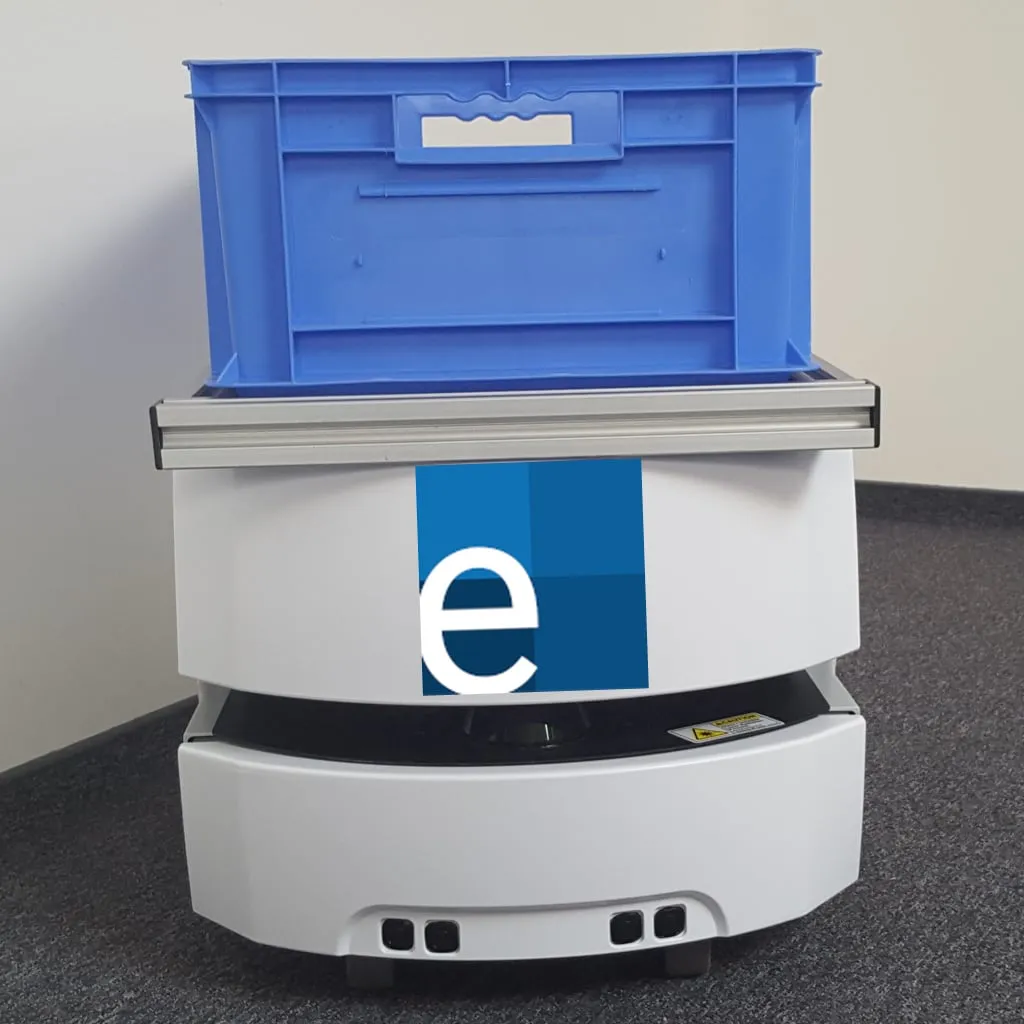
Autonomous transport robots
Every FTL solution is based on autonomously navigating transport robots. They orient themselves by their surroundings, detect obstacles with their sensors, calculate their own position and plan the route to the destination. No guide lines or building alterations are needed.
- Navigation based on the surroundings, even on busy routes.
- When there is an obstacle, the robot chooses another route.
- It drives to the charging station on its own.
- Attachments adapt the robot to the goods, payload up to 60 kg.
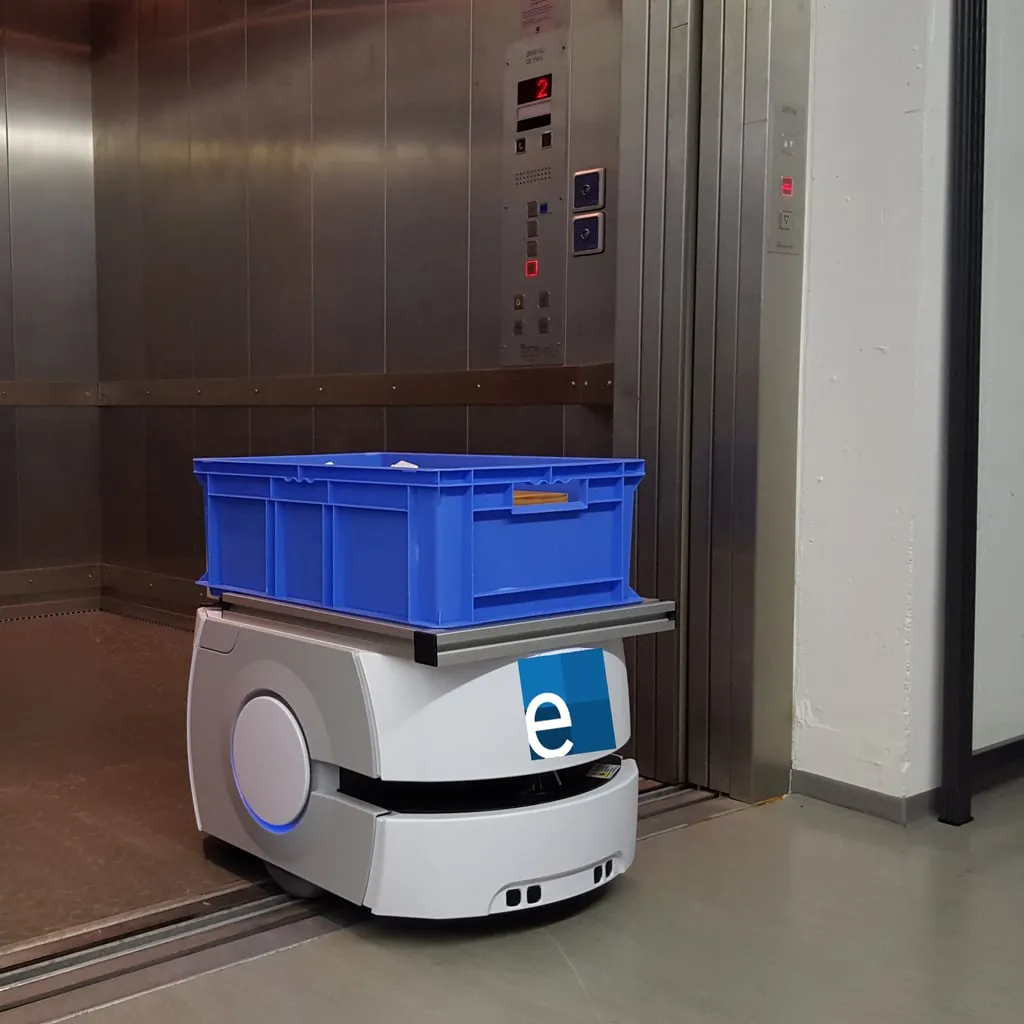
Across areas and floors
FTL clears the way
A transport robot finds its way on its own, but it cannot operate a closed door, an airlock or a lift. That requires a higher-level system that talks to the building services.
FTL handles this communication: it opens doors and gates, calls the lift and controls which robot may enter which area. This extends the robots' reach across entrances and floors.
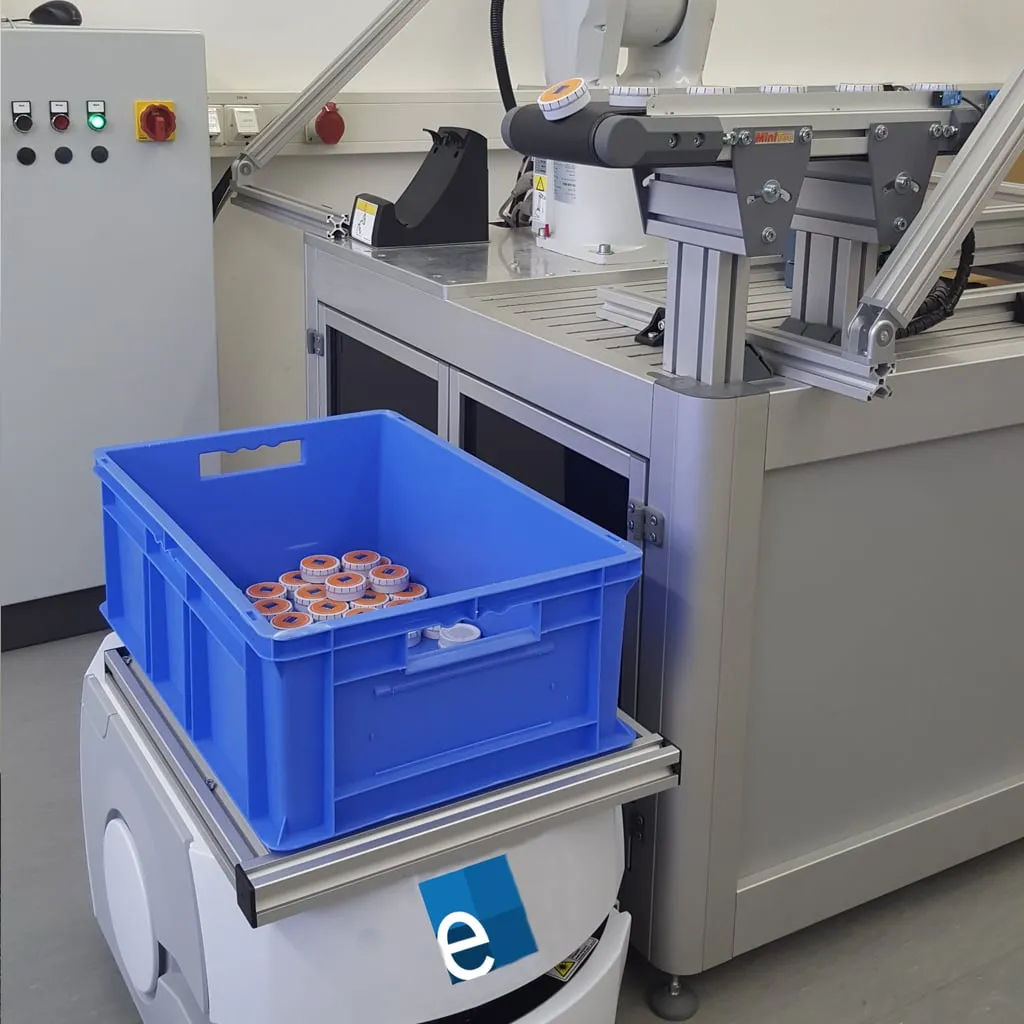
Linking machines
Automated material flow
For loading and unloading machines, FTL provides the interface for linking them. When a batch size is reached, for example, the machine requests removal. FTL checks which robot is free and closest, and sends it off.
- Even traffic without congestion on the routes.
- Material is continuously available at the machine, so the system runs on its own for longer.
- Every transport is recorded automatically and can be traced.
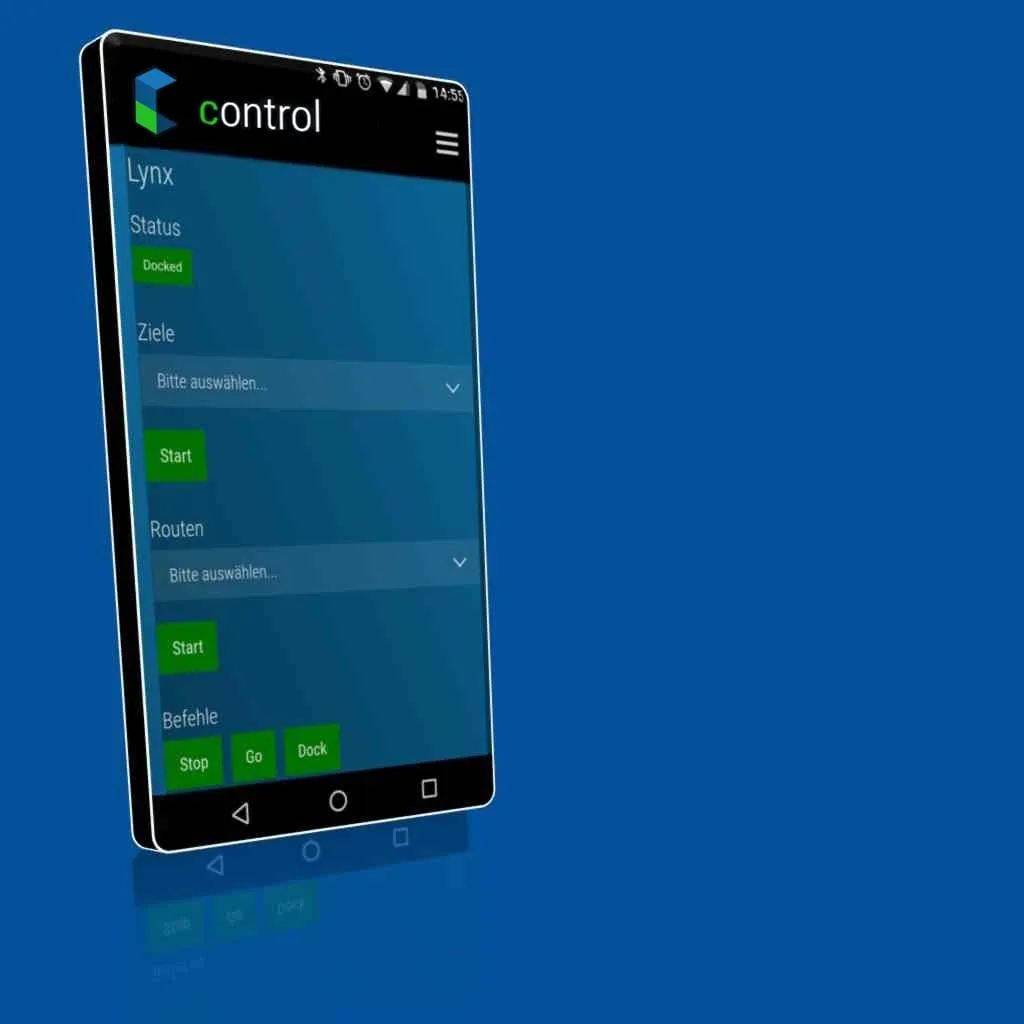
For manual workstations
Calling a robot by mobile phone
Not every transport comes from a machine. For manual workstations and occasional trips, your employees call a robot via the control web application on their phone: choose the pick-up point and route, and FTL takes the job and organises the pick-up.
Deliveries and removals happen in the background, and staff can concentrate on their actual work.
Vertical integration
From the ERP to the robot
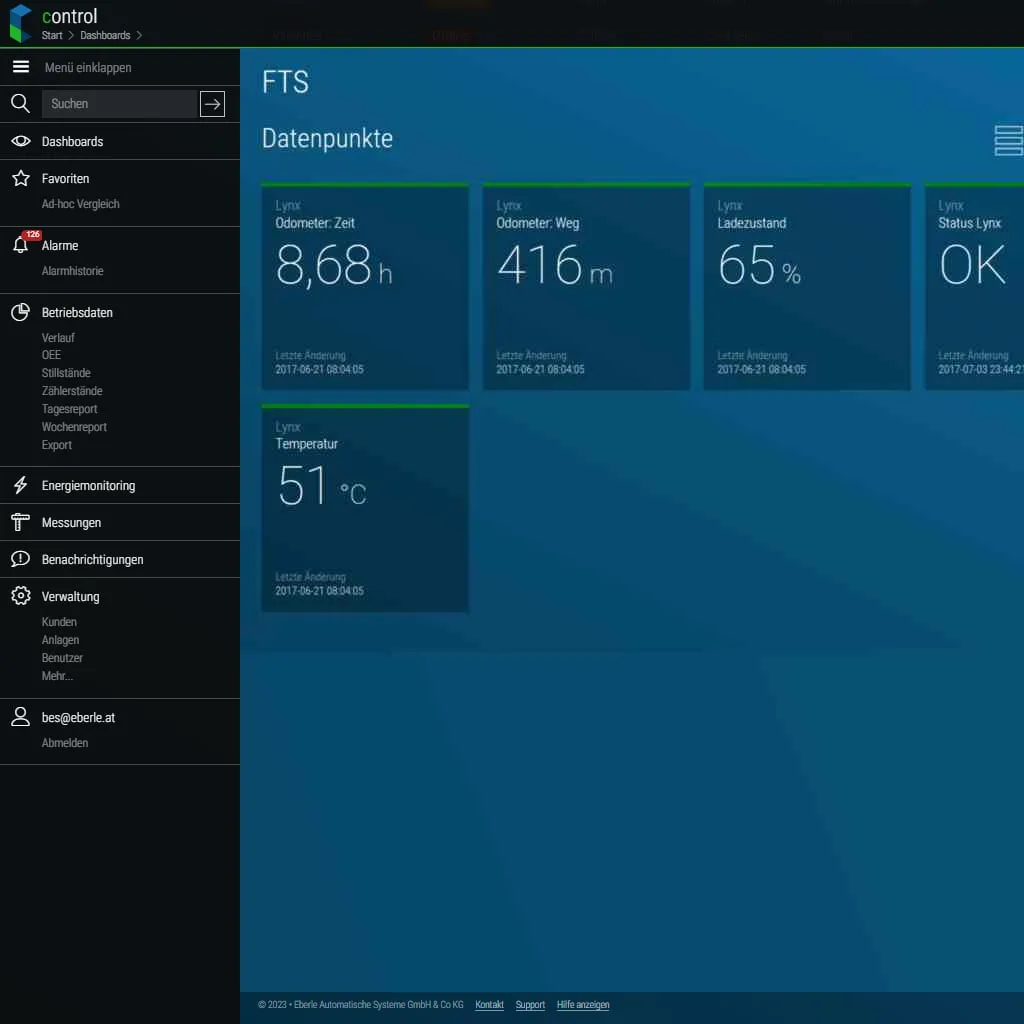
The IoT platform control connects FTL with the enterprise level. It passes on transport jobs from the ERP, allows manual entry and continuously stores the robots' operating data for production data acquisition.
Jobs, status and maintenance information are available throughout the company, and transports can be linked directly to order processing.
Demo video
FTL in action
FTL, transport robots and control in practice: FTL controls the automatic removal of material and the journey across several floors and the outdoor yard.
Playing the video loads it from YouTube (Google), which transmits your IP address. More in our privacy policy. Watch on YouTube
Frequently asked questions
What does FTL stand for?
FTL stands for the German "Fahrerlose Transport-Lösung", a driverless transport solution. It is the control system that steers autonomous transport robots and connects them with the building, machines and ERP.
Can the robots use doors and lifts?
Yes. FTL handles the communication with doors, gates, airlocks and lifts, so the robots can travel across areas and floors.
How is a transport triggered?
By a signal from a machine, via the ERP connection or manually by mobile phone through control.
Does the building have to be altered?
Not for navigation: the robots orient themselves by their surroundings and need no guide lines. For doors and lifts, FTL connects the existing building services.
How much can the transport robots carry?
Up to 60 kg. Attachments adapt them to the goods being transported.
Automate transport?
We discuss with you which transport routes in your company can be automated with FTL.