

A growing number of variants, short delivery times and cost pressure are pushing classic automation to its limits. Physical AI connects the physical world of machines with the digital world of artificial intelligence: AI, robotics and intelligent image processing work together to make production more versatile, faster and more economical.
One example is physical AI item picking: the robot picks items it has never seen before, without having to be taught them first.
What physical AI can do
Understand requirements
The system interprets a task on its own instead of having every step hard-coded.
Plan processes
Sequences are planned and continuously optimised.
Use robots flexibly
The same robot takes on changing tasks without extensive reprogramming.
Recognise parts
3D image processing captures the position and shape of the parts.
Automate the new
Tasks that could not be automated economically before become possible.
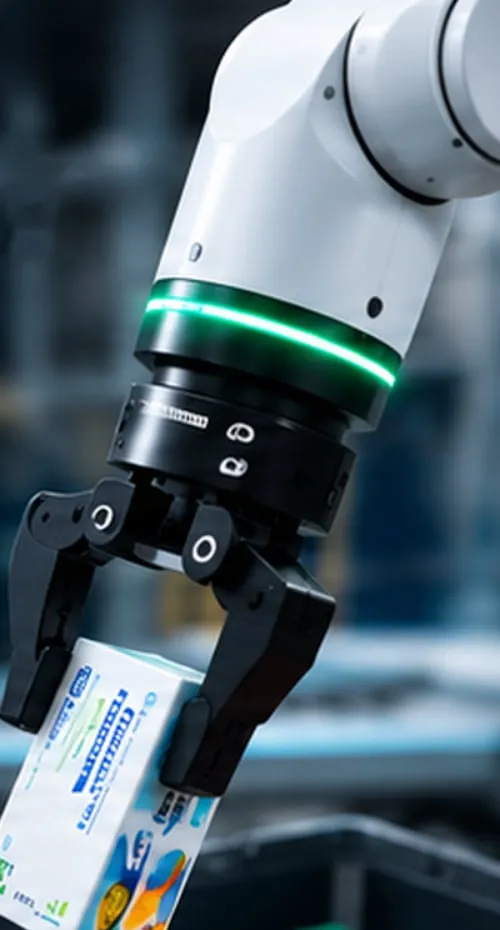
Physical AI item picking
Picking what the robot has never seen
In order picking, every new item has so far meant extra work: it has to be taught, adjusted and tested before the robot can handle it reliably. With changing product ranges, this is often exactly where automation fails.
Physical AI item picking takes a different approach. 3D image processing and AI agents recognise the situation in the bin and select the right item, and the robot picks it in a targeted way. The system
- recognises previously unknown products,
- needs no product-specific teach-in phase,
- picks from mixed bins,
- picks order by order.
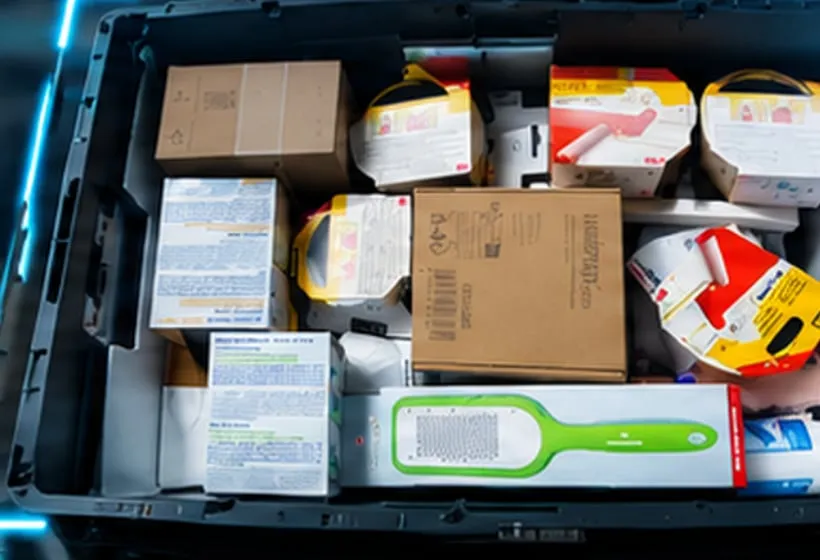
How a pick works
3D camera, AI agent and robot work together as one system, even with changing products:
- Capture: a 3D camera captures all products and their position in the bin.
- Understand: an AI agent interprets the scene and identifies the requested item.
- Plan: the system determines the right gripping strategy.
- Pick: the robot removes the product and hands it over to the next process.
Which item is picked comes directly from the customer order or from your ERP or warehouse management system (WMS). When the product range changes, the system keeps running, without any new teach-in.
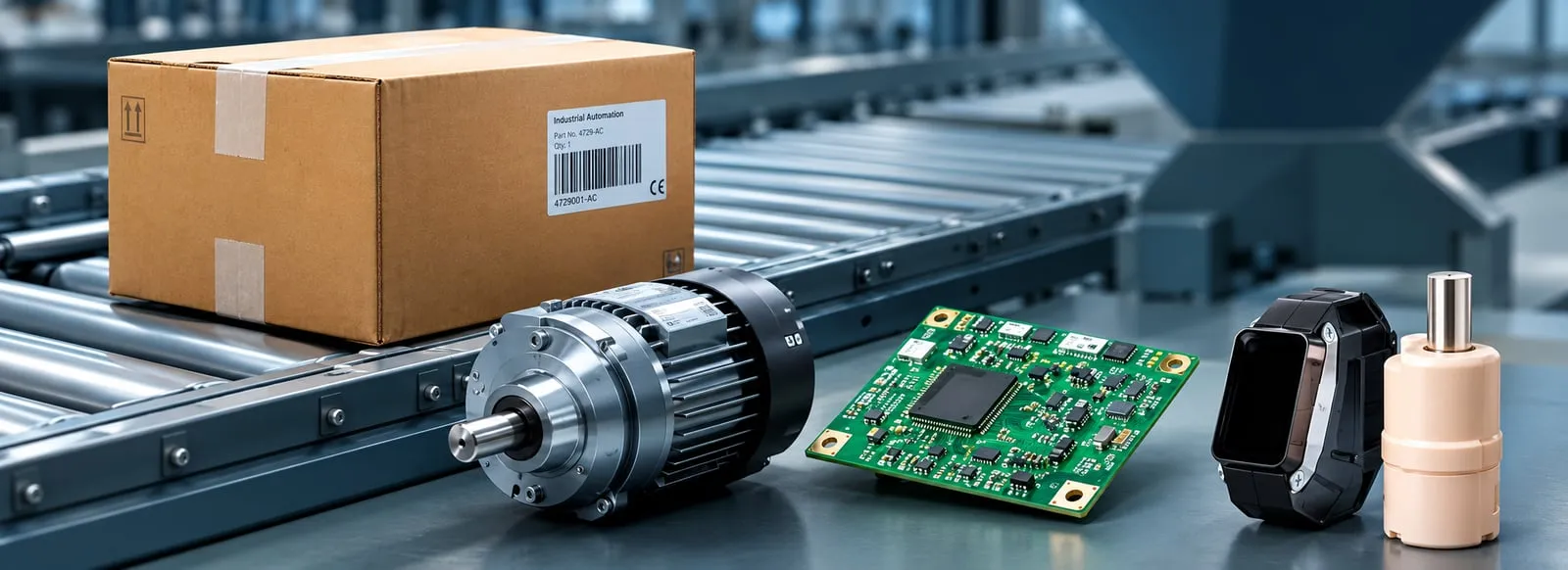
One solution for many product ranges
Physical AI item picking is not limited to a few known products. The system picks a wide variety of items from small load carriers (KLT), cardboard boxes and other containers, for example:
- consumer products and retail goods
- mechanical components
- electronic components
- mixed and changing product ranges
Whether in e-commerce, intralogistics or manufacturing: by combining 3D image processing, AI agents and robotics, applications become economical that used to be feasible only with great effort.
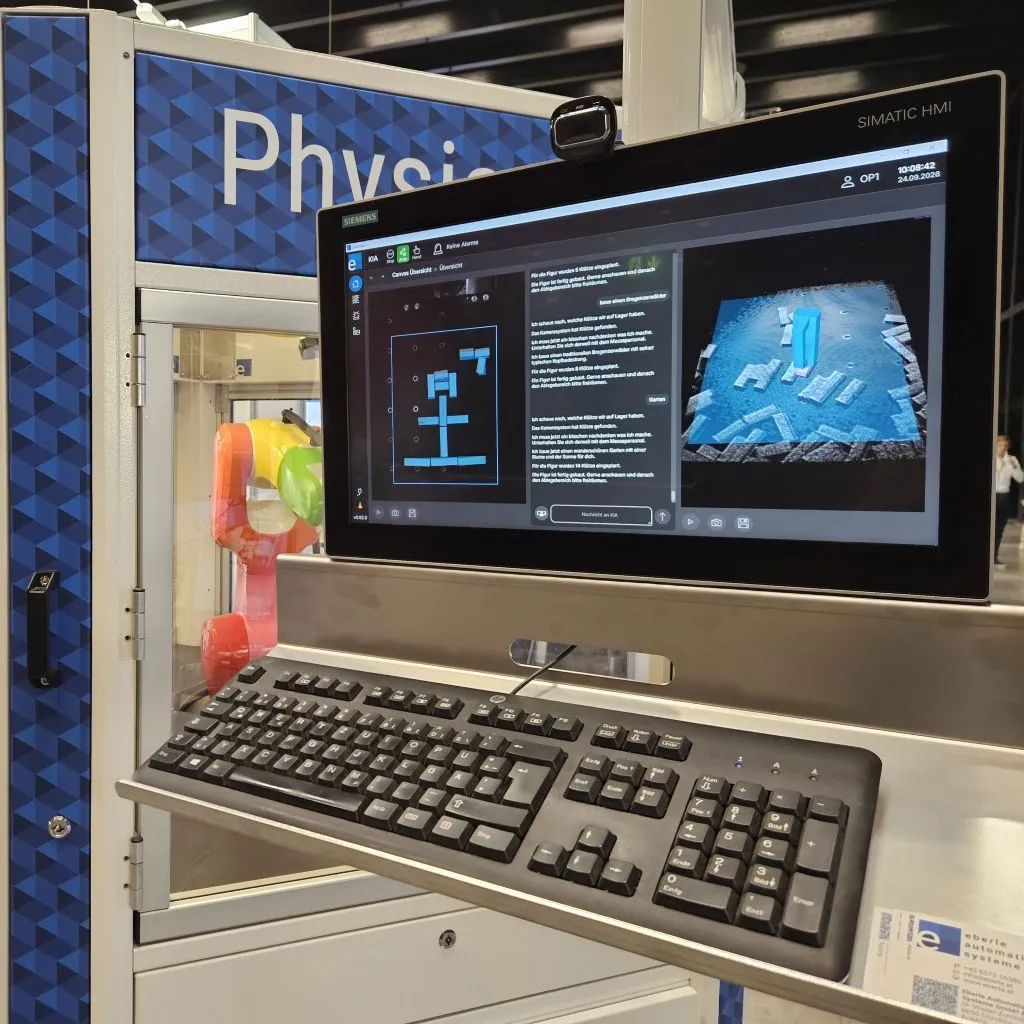
Live demo
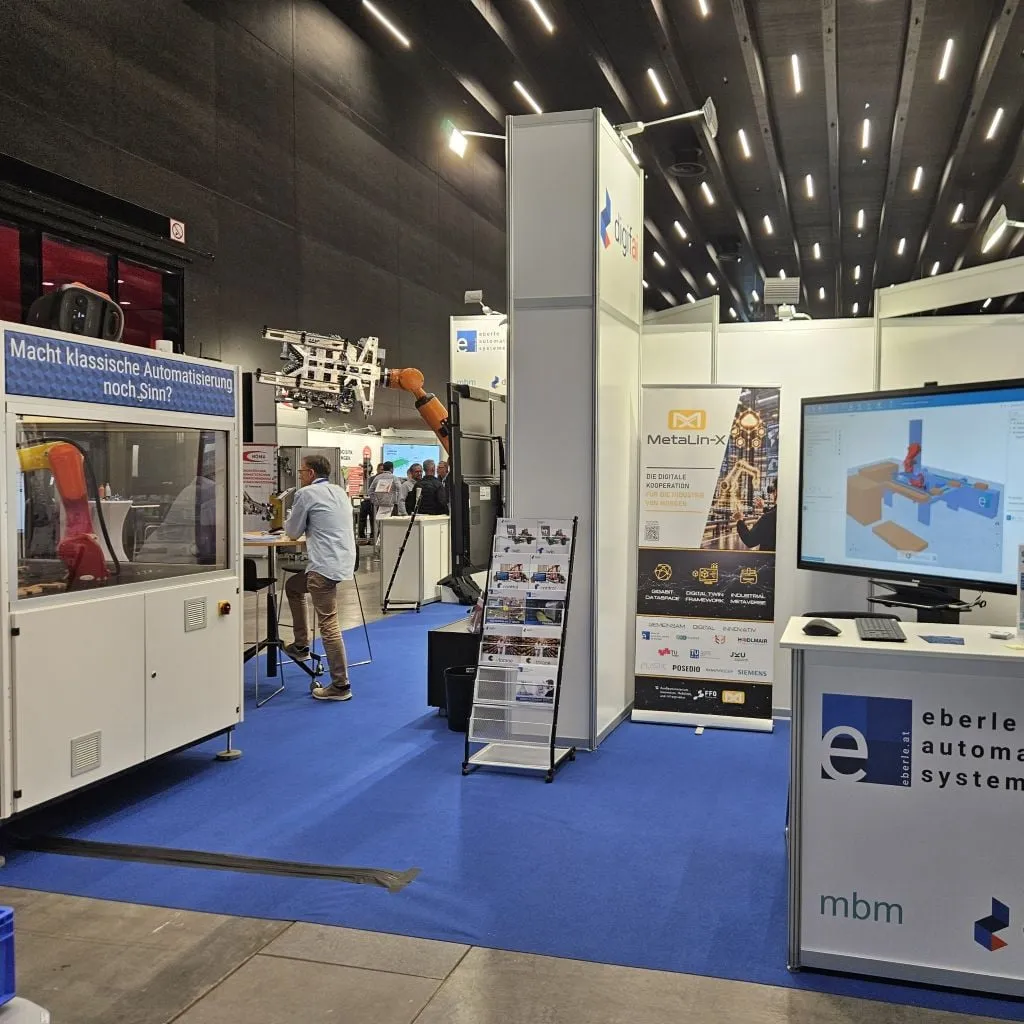
In our demo cell you can see how a requirement turns into a working solution: the software plans the sequence, 3D image processing recognises the parts and the robot carries out the task.
At TECH.CON 2026 in Dornbirn, the live demo was the starting point for many expert discussions, together with our stand partners KUKA, AETOS, digifai and mbm.
Bring your application
Is your picking task considered too complex for a robot? Do you have a complex process or a task that could not yet be automated economically? Or simply a wild idea? These are exactly the cases we are interested in.
Together we discuss possible solutions and show what physical AI can already do today, drawing on our experience in robot automation and industrial image processing.