

The keyword Industry 4.0 stands for developments such as the Internet of Things (IoT) that are changing production. Classic processes are evolving from mass production towards individual one-off manufacturing. This calls for adapted production processes and the management of small batch sizes. The products of the future have individual characteristics and, ideally, request the production steps they need themselves.
The way into Industry 4.0 begins with the digital transformation of business processes. Digitalisation optimises production, reduces friction and enables new business models.
In future, all information on products and their manufacture must be digitised and available in big-data silos and be distributable across different levels (information floors). The digitalised industry needs a broad information platform and secure data management. With cloud solutions such as the Mobile Control Center, today part of control, information on production processes, manufacturing data and resources becomes decentralised and highly available.
Building blocks of digital manufacturing
- Digital twins: products and machines are first created on a digital model. A lifelong partnership develops between the product or production and its digital model: development is initially carried out on the digital model and then transferred to the reality of production at the push of a button. A machine is represented in a virtual 3D system with all its physical properties and commissioned virtually before it is built.
- Intelligent logistics: products know their way through production and issue transport orders to autonomously navigating driverless transport systems.
- Predictive maintenance: anticipatory maintenance reduces downtime of machines and plants.
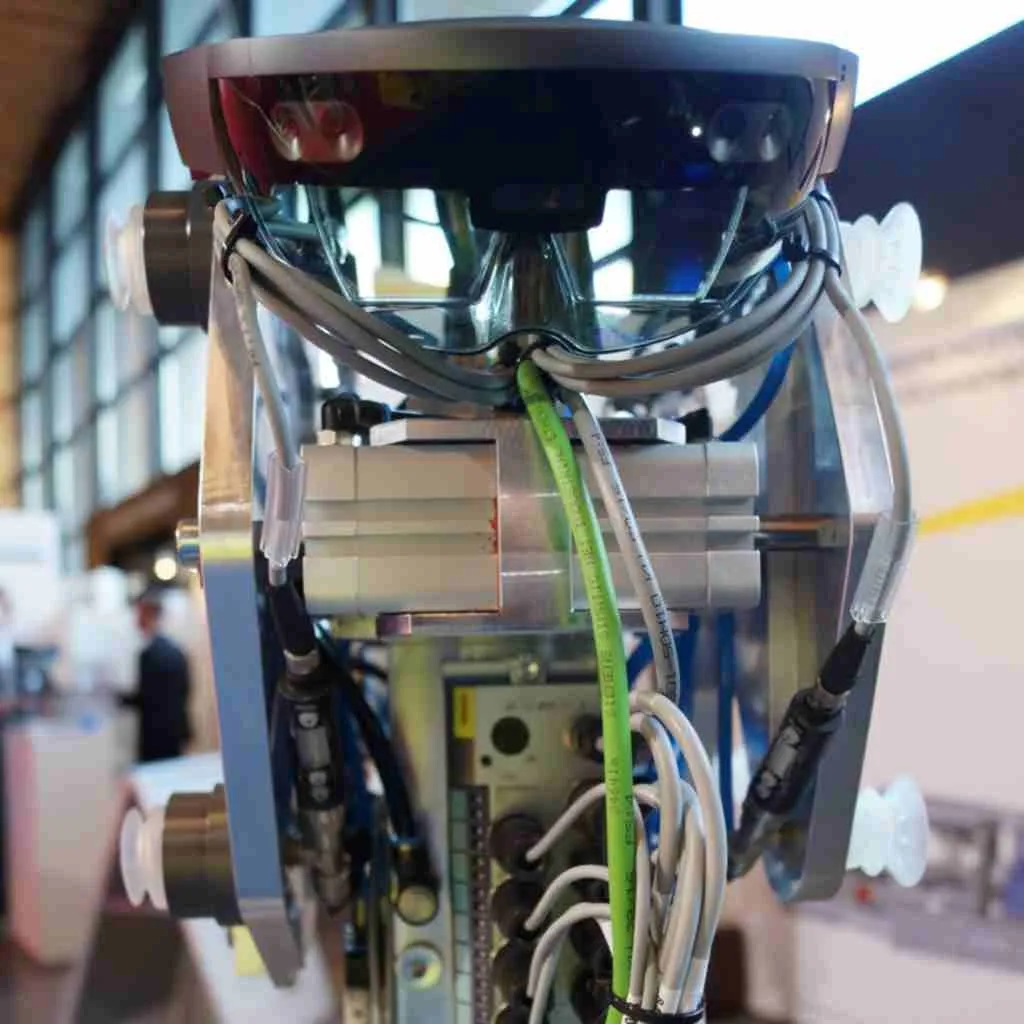
- Image processing and augmented reality: intelligent camera systems enhance the senses: they add what the human eye cannot see and show the operator all relevant information.
- Collaborative robots: humans and machines complement each other and work hand in hand. Collaborative robots make such cooperation possible.
The digital transformation is not limited to manufacturing; it covers all areas of a company up to management. After all, fully automated and digitalised production opens up completely new perspectives. Every journey starts with a first step, for example central production data acquisition. It makes processes visible in detail and is the basis for a digitalisation strategy.