

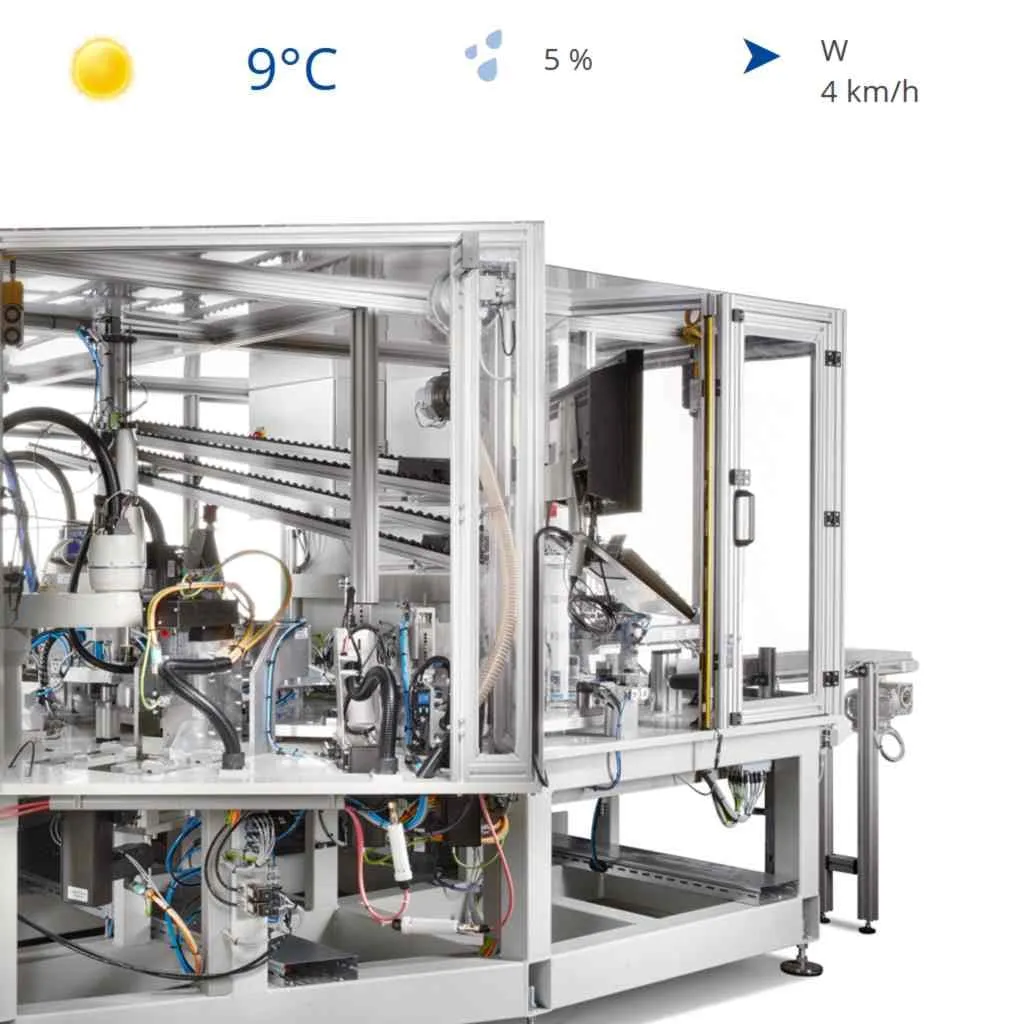
It is well known that good weather has a positive effect on human performance: receptiveness and concentration rise, the risk of illness falls, and a good mood motivates top performance. Even minor disruptions such as small injuries are easier to accept in good weather. That is certainly true for the human body, but what about machines? What weather does a machine need to produce at its best? Machines have no sense organs. They stand in production and work according to their programming. If the parameters change, the system simply carries on.
Machines in networked systems come a little closer to the human organism. With networked sensors and artificial intelligence, they “experience” their environment and form a picture of their own condition. Thanks to networking, they can draw attention to themselves, for example to request help. People, machines and resources communicate with each other in networked structures. A “freezing” building, for instance, can ramp up the production facilities in bad weather to heat with the waste heat from production. If a machine suffers from wear and detects through predictive maintenance that maintenance is due, it can request help and at the same time report its condition to the process control. Production adapts to the new situation and reduces the throughput speed.
Machines and plants that think along in production reduce errors and optimise the process. By intelligently linking ERP systems with the production level, production control responds directly to changes in the weather on the sales market. With fewer staff available, the machine automatically adjusts its output. Using linked fitness data from the operating staff, a plant reacts in advance like an autopilot before a dangerous situation arises.
For machines, plants and structures to respond intelligently, they have to communicate with each other. Machine-to-machine (M2M) technology puts such concepts into practice. The data generated by machines, plants and structures is collected, condensed and processed: sensors and actuators connect via their controller to a cloud such as control, where the data is first stored and recorded over time. This creates large data silos holding a lot of information. Big data solutions process this data using data mining and turn it into useful information for instructions. The cloud provides this information wherever it is needed. The interaction of data, cloud and big data creates neural networks that react to environmental influences and can interact with other network participants. In good “machine weather”, the entire production runs at full capacity. When the forecast is poor, intelligent production develops a strategy adapted to the situation.